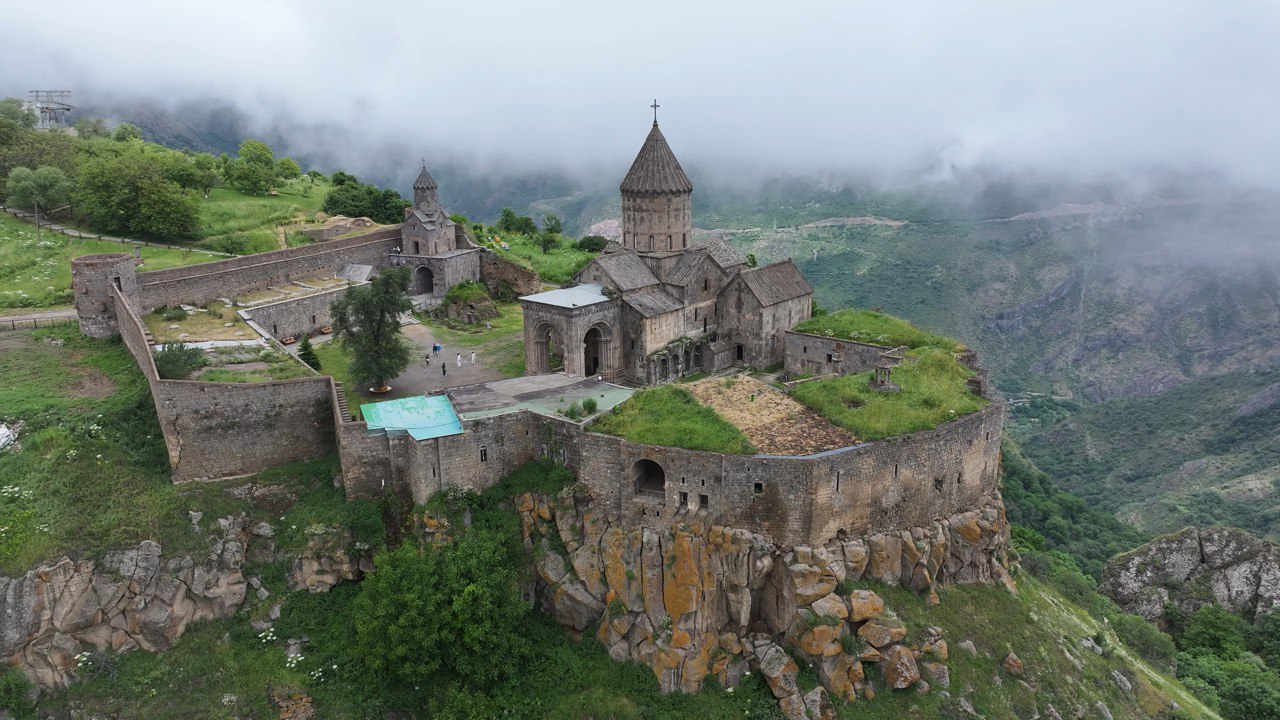
Tatev Monastery
Tatev Monastery, a masterpiece of medieval Armenian architecture, is located in the Syunik Province on the edge of the magnificent Vorotan River Gorge. Founded in the 4th century as a spiritual center, by the 9th-10th centuries it became the seat of the Syunik Diocese and a major feudal estate. The central part of the complex is the Surb Poghos-Petros Cathedral (built in 895-906), renowned for its ancient frescoes. In the 14th century, a university was established in Tatev, becoming a significant center of science and culture under the leadership of Hovhan Vorotnetsi and Grigor Tatevatsi. A rich scriptorium and a school of miniature painting also operated here.
The monastery held important strategic significance and was a focal point for Syunik’s liberation struggles. The unique “Gavazan” monument, built in 904 and serving as a seismic and alarm system, stands intact to this day.
The monastery suffered significant damage in the 1931 earthquake, but restoration efforts began in 1974. Under the “Tatev Revival” program, launched in 2010 with the inauguration of the “Wings of Tatev” ropeway, the monastery is being restored, transforming into a global tourism destination. The number of visitors to the monastery via the ropeway has increased tenfold, contributing to the region’s development.